
Arlington (Main Office)
Boost Air And PlumbingArlington, TX
- 2313 Michigan Ct
Arlington, TX 76016 - (817) 612-9107
- Monday to Saturday: 8:00 AM to 7:00 PM
Boost Air Blog
When Duct Cleaning Helps in Arlington, and What It Will Not Fix? Call (817) 612-9107 or Book Online
Part of our Air Duct Cleaning guide.
Quick answer
Air duct cleaning in Arlington is worth doing when debris is actually in the ducts, not on a yearly schedule. The U.S. Environmental Protection Agency does not recommend routine cleaning. It points to substantial visible mold on hard-surface ducts, vermin, or ducts so clogged that particles come out of the supply registers. Cleaning removes that debris. It does not repair a failed air conditioner or a torn duct.
Air duct cleaning in Arlington is a job people ask for after a remodel, after they see dust at a register, or after someone told them every house needs it once a year. Sometimes the ducts do need to be cleaned. Often they do not. Arlington houses are full of attic flex duct sitting over a slab, and that attic collects construction dust, insulation fibers, and whatever the return pulls in when a filter is missing. The question is whether that material is inside the ducts in a way that cleaning will actually remove, or whether the house has a different problem.
This page is the honest sort: when cleaning is warranted, what a proper cleaning includes, and what it will not fix. Air duct cleaning is the service. HVAC service in Arlington is the local page.
If you smell gas, leave. Duct cleaning is not a gas repair, but the furnace is in the same cabinet as the blower. Do not flip switches or use a phone inside. Call your gas utility or 911 from outside. If a carbon monoxide alarm sounds, get everyone out and call 911. If you smell electrical burning at the furnace switch, or you see scorched wire, leave the breaker off. Do not open the blower compartment to look.
The U.S. Environmental Protection Agency does not recommend that air ducts be cleaned as a routine. Its published guidance says knowledge of the benefits is limited, and that cleaning is considered in specific situations:
EPA also says duct cleaning has not been shown to prevent health problems. A company that says EPA recommends a yearly cleaning is misrepresenting that guidance. Claims that cleaning will cut your energy bill, or will stop illness, go beyond what EPA supports. A light film of ordinary household dust is not, by itself, the situation EPA describes.
If one of those conditions is present, EPA's point is to correct the cause as well. Mold comes back if the duct stays wet. Pests come back if they can still get in. Debris comes back if the return has no filter.
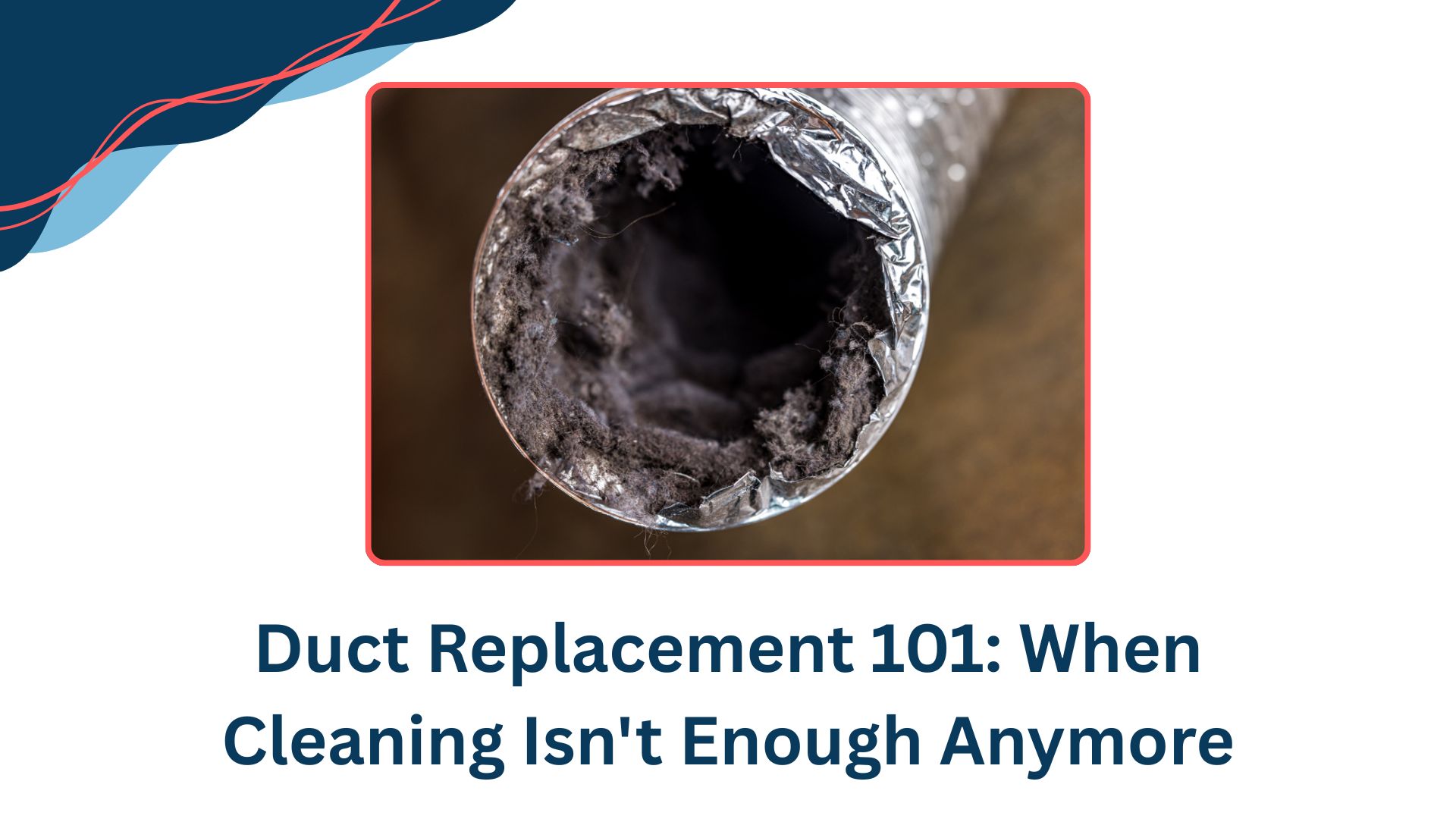
Debris you can see, and debris that blows out. Lift a supply register. A thick mat of dust, drywall crumbs, or insulation on the boot, or puffs of that material when the blower starts, matches the "excessive debris" case. A faint gray film on the grille is what a house collects between filter changes. Wipe the grille. It is not a duct cleaning.
After a remodel or construction. Sanding, drywall, and flooring put a lot of fine dust into a house, and the return will pull it in if the system ran during the work or the filter was left out. If that dust is packed in the returns and coming out of the supplies, cleaning is a reasonable job. If the only change is dust on the furniture, start with a new filter and a wipe-down. The ducts may be fine.
Pests. Droppings, nesting material, or an obvious entry at a return or a disconnected attic run are a reason to inspect and clean, and to close the opening. Vacuuming the nest without finding where the animal got in leaves the next one a path.
Mold concerns. A musty smell is not automatically mold in the ducts. In North Texas it is often a wet evaporator coil, a drain pan that held water all summer, or a filter that stayed damp. Those are equipment and drain problems. Substantial visible mold on sheet-metal duct or on the coil is a reason for an inspection. Fogging a smell and leaving the water source in place does not finish the job. If the insulation inside fiberglass duct board or lined flex is wet or moldy, surface cleaning does not restore it. That material usually has to come out and be replaced. Do not scrape a suspect growth and sniff it to decide.
The useful version puts the duct system under negative pressure, so dust is pulled into a collector instead of blown into the rooms. Supply trunks, the return, and the registers that can be reached are agitated and vacuumed. The blower compartment is checked while the air handler is open, because a wheel packed with debris is part of the same air path. Access holes, if any are cut, get closed when the work is done.
What is not a cleaning:
The filter goes back in, the right size, before the system runs. A cleaning with no filter afterward undoes itself on the next cycle.
You should be able to ask which sections were reached and what was found. Construction dust, a nest, and ordinary filter dust are different findings. The price depends on the system and on how much of the duct system can actually be accessed. There is no single Arlington cleaning price on this page. An attic full of long flex runs is a different job from a short closet system with metal trunk lines.
Cleaning does not repair an air conditioner that blows warm air, a frozen coil, a failed capacitor, or a refrigerant leak. If the house will not cool, start with the equipment. A clean duct will not make a dead outdoor unit start.
Cleaning does not seal or replace a torn, crushed, or disconnected run. Many Arlington attics have flex that has fallen off a boot or kinked under a foot. The blower is moving air. The room is not getting it. Vacuuming the inside of a duct that is no longer connected does not put the air back in the room. That is a different repair from cleaning, and it should be called out as its own job if that is what the attic shows. A cleaning visit that pretends a disconnected boot is "dirty ducts" is the wrong sale.
Cleaning does not resize a system that was never large enough, and it does not replace a filter you were supposed to change. A higher-MERV filter than the blower was set up to use can restrict airflow. That restriction is not fixed by cleaning the ducts downstream of it.
A musty smell from a dirty coil or a standing drain pan needs the coil and the drain addressed. Duct cleaning alone will not dry a wet pan.
If the registers are clean, the filter is new, and the complaint is warm air or no heat, cleaning is the wrong first job.
Describe what you are seeing, or what changed after construction, and the visit can be matched to that. If the ducts are not the problem, you should hear that before anyone sells a cleaning.
Boost Air HVAC & Plumbing cleans air ducts for homes in Arlington and nearby communities when the ducts actually need it. See our air duct cleaning service and HVAC service in Arlington. Call (817) 612-9107 or book online. Same-day service Mon-Fri. Hours are Monday through Saturday, 8am to 7pm.
Does the EPA say air ducts should be cleaned on a schedule? No. The U.S. Environmental Protection Agency does not recommend routine duct cleaning. Its guidance says to consider cleaning when there is substantial visible mold growth on hard-surface ducts or other heating and cooling parts, when ducts are infested with rodents or insects, or when ducts are clogged with excessive dust and debris and particles are coming out of the supply registers.
Will duct cleaning fix a house that will not cool? No. A failed capacitor, a frozen coil, low refrigerant, or a disconnected duct run is an equipment or duct repair. Cleaning removes debris. It does not restore a part that has failed, and it does not reconnect a supply that has come apart in the attic.
What does a proper duct cleaning include? The supply trunks, the return, and the registers that can be reached, with the system under negative pressure so dust is pulled out rather than blown into the house. The blower compartment is checked while the system is open. A vacuum at one register, or a spray that leaves the debris in place, is not that job.
What if I see mold or had pests in the ducts? Visible mold and rodent or insect debris are reasons to inspect, not reasons to fog the ducts and call it finished. The moisture or the entry point has to be corrected or the problem returns. Wet or moldy insulation inside a duct usually has to be removed and replaced. It does not clean back to sound material.
Can duct cleaning be booked on a weekday? Yes. Same-day service Mon-Fri when the schedule allows. Describe what you see in the registers, or what changed after a remodel, so the visit matches the ducts rather than a house that only needs a new filter.
Call (817) 612-9107 or book online. We serve Arlington, Grand Prairie, and the surrounding North Texas communities.
Visit our shops
Boost Air And Plumbing dispatches trucks from our Arlington main office and our Grand Prairie shop, covering Tarrant and Dallas counties with same-day HVAC and plumbing service. Call (817) 612-9107 for either location.
Arlington (Main Office)
Grand Prairie