Arlington (Main Office)
Boost Air And PlumbingArlington, TX
- 2313 Michigan Ct
Arlington, TX 76016 - (817) 612-9107
- Monday to Saturday: 8:00 AM to 7:00 PMAfter-hours and Sunday emergency appointments available.
Boost Air Blog
Furnace Repair in Arlington? Call (817) 612-9107 or Book Online
Part of our Furnace Repair guide.
Quick answer
Furnace repair in Arlington is usually the igniter, flame sensor, limit switch, inducer, or blower. The symptom tells you which step stopped, and it does not mean the burner cover should come off. If you smell gas, leave and call the gas utility or 911 from outside.
Furnace repair in Arlington is usually one of a short list of parts. The furnace sat through a long cooling season. The first cold night asks the igniter, the flame sensor, the inducer, the limit switch, and the blower to work in order. When one of them does not, the house gets a click, a short burst of heat, cold air, or silence. The symptom tells you which step stopped. It does not tell you to take the burner cover off.
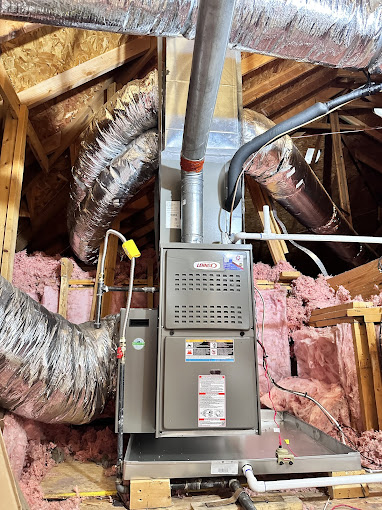
Arlington furnaces are often in a hall closet or in the attic. The sequence is the same. The access is not. This page matches the common parts to what you hear and feel, and it stops the homeowner checks before the gas valve and the heat exchanger.
If you smell gas (a rotten egg odor), stop. Do not flip switches, use a phone inside, or try to relight anything. Leave the home and call your gas utility or 911 from outside. If a carbon monoxide alarm sounds, or anyone has a headache, nausea, or dizziness that eases outdoors, get everyone out and call 911. Do not reset the alarm and keep the furnace running.
Electrical problems are a stop. Reset a tripped breaker once. If it trips again, or you see scorched wire at the switch or the disconnect, leave it off. Do not open the blower compartment to look at the board.
On most furnaces built in the last few decades, a hot surface igniter glows, then the gas valve opens. A worn igniter cracks and never glows. You hear the inducer, sometimes a click from the board, and the burners stay dark. The blower may come on later and push room air, which feels like cold air from the vents.
Do not sand, bend, or swap an igniter from a different model. They break if you touch the element, and the wrong one will not light the burners even when it glows. The wider no-light walkthrough is furnace not igniting.
The burners catch, you feel a little heat, and the gas shuts off within seconds. The furnace tries again. After a few tries it locks out. A flame sensor that is coated after a summer of sitting cannot prove the flame, so the board does the safe thing and closes the valve.
Cleaning a sensor is a technician job. The rod has to be the right part, seated where the flame actually is, and the board has to be seeing that signal. A homeowner wire brush on the wrong rod, or a sensor that is moved out of the flame, makes the next diagnosis harder. If the burners light and die, stop resetting it.
The high limit watches the heat exchanger. Air has to cross it. A packed filter, closed supplies, or a weak blower lets heat build up, and the limit shuts the burners off. The blower often keeps running to cool the cabinet, so the vents go from warm to cold. That pattern, repeating every few minutes, is short cycling. The Arlington version of that call is furnace short cycling in Arlington.
Replace the filter with the size on the frame, open the supplies you use, and restart once. If the burners die again, stop. Repeated overheating is hard on the heat exchanger. A rollout switch, which trips when flame leaves the burner box, is a different switch. Soot, scorch marks, or a yellow flickering flame instead of steady blue means leave the furnace off. Do not reset a rollout to get through the night.
The inducer motor runs first. It clears the burners and the vent, and a pressure switch has to close before the igniter is allowed to glow. If the inducer is silent, seized, or loud and then stops, the rest of the sequence never starts. A blocked PVC intake or exhaust, a nest, a cracked hose, or water in the pressure hose does the same thing with a good motor.
From the ground, look at the outdoor PVC pipes and clear leaves or a cover. Do not climb an attic to pull hoses off a pressure switch. If the small window on the furnace shows a blink code, write it down and match it to the chart inside the blower door only if that door is already open for the filter.
The blower moves the heated air. A seized motor, a failed capacitor, or a wheel that is rubbing the housing gives you heat at the furnace and little or nothing at the vents, or a squeal and then a limit trip. A blower that runs all the time is often the fan switch set to ON, or a limit that has left the fan on after the burners died. Set the fan to AUTO before you assume the motor is bad.
Do not run the furnace with the blower door off, and do not run it with no filter. Both change the airflow the limit is counting on.
Call for furnace repair if the checks are done and the furnace still will not heat, the burners light and die, a rollout has tripped, you see soot or a yellow flame, the same code returns, or the breaker trips again. The no-heat call in Garland, including what the technician measures and the safety stops, is furnace repair in Garland. A first cold night with no heat in Benbrook is furnace repair in Benbrook. Cold air and short cycling in Cleburne are furnace repair in Cleburne.
The technician follows the sequence: thermostat call, inducer, pressure switch, igniter, gas valve, flame signal, blower, temperature rise. The failed step is the repair, not a stack of parts. You hear what failed and the price before parts go in.
An igniter, a flame sensor, a capacitor, or a pressure switch on a younger furnace with a sound heat exchanger is often a repair. A cracked heat exchanger or a major failure on a furnace around 15 years old is a replacement conversation. The U.S. Department of Energy's Energy Saver material lists a furnace more than 15 years old as one reason to consider replacement. That is a prompt, not an expiration date. Ask for a free replacement estimate when the numbers are close. HVAC service in Arlington is the local page.
Boost Air And Plumbing repairs gas furnaces in Arlington, Grand Prairie, Mansfield, Fort Worth, and nearby communities. We do not service boilers. See our furnace repair service and HVAC service in Arlington. Call (817) 612-9107 or book online. Hours are Monday through Saturday, 8am to 7pm, with after-hours and Sunday emergency appointments available.
This guide is also available in Spanish: reparación de calefacción en Arlington.
What furnace repairs are most common in Arlington? Hot surface igniters, dirty or failed flame sensors, limit switches that open from low airflow, inducer motors and pressure switches, and blower motors. Each one stops the sequence in a different place, so the symptom matters more than the age on the cabinet.
What does a bad igniter sound and look like? The inducer may run, you may hear a click, and the burners never light. On many furnaces the igniter should glow before the gas valve opens. If it never glows, the gas valve stays closed and the blower can still push unheated air. Igniters are fragile and have to match the model. Leave that part to a technician.
Why do the burners light and then shut off? A dirty flame sensor is the usual cause. The burners light, the sensor does not prove flame, and the control board closes the gas valve within seconds. The furnace tries again, then locks out. A limit switch from a packed filter can shut the burners off too, often with the blower left running.
Can I keep resetting the furnace? Restart it once or twice after a filter change. If the burners light and die, a rollout switch has tripped, the same code returns, or the breaker trips again, stop. Repeated resets hide a real fault and can overheat the heat exchanger.
When is the repair a replacement conversation? An igniter, a flame sensor, a capacitor, or a pressure switch on a younger furnace with a sound heat exchanger is often a repair. A cracked heat exchanger, a rusted cabinet, or a major failure on a furnace around 15 years old is a time to hear a replacement price next to the repair. Ask for a free replacement estimate if the numbers are close.
Call (817) 612-9107 or book online. We serve Arlington, Grand Prairie, and the surrounding North Texas communities.
Visit our shops
Boost Air And Plumbing dispatches trucks from our Arlington main office and our Grand Prairie shop, covering Tarrant and Dallas counties with same-day HVAC and plumbing service. Call (817) 612-9107 for either location.
Arlington (Main Office)
Grand Prairie