
Arlington (Main Office)
Boost Air And PlumbingArlington, TX
- 2313 Michigan Ct
Arlington, TX 76016 - (817) 612-9107
- Monday to Saturday: 8:00 AM to 7:00 PMAfter-hours and Sunday emergency appointments available.
Boost Air Blog
Part of our Furnace Tune-Up guide.
Grand Prairie furnaces spend most of the year as blowers for the air conditioner. Then a front comes through, the house drops into the 30s or 40s, and the first call for heat is also the first time anyone finds out the igniter is cracked, the filter is a brick, or the condensate line froze at the trap. That is a bad evening to learn it.
Turning the furnace on once, on purpose, while the afternoon is still mild, is a homeowner check. It is not a tune-up. It will tell you whether the system answers, what it smells like, and whether the air at the register actually warms up. The steps below are the ones that do not involve the burner box.
If you smell gas (a rotten egg odor), do not start the furnace. Do not flip switches or use a phone inside. Leave the home and call your gas utility or 911 from outside. If a carbon monoxide alarm sounds, or anyone has a headache, nausea, or dizziness that eases outdoors, get everyone out and call 911. Carbon monoxide has no odor. Test the alarms before this startup, not instead of leaving if one is already sounding.
From roughly spring into fall the burners sit. The flame sensor coats. A hot surface igniter that was barely hanging on in March gives up in November. High-efficiency furnaces still make water when they run, and a trap that sat dry can clog or, on a hard freeze, ice up the first night you need it. The blower, meanwhile, has been working. Dust from a long cooling season is on the wheel and on the heat exchanger.
Grand Prairie houses often have that equipment in the attic or a closet, with ducts in the same hot space. A loose vent or a filter door that does not close is easy to miss while you are running the air conditioner. Heat is when exhaust and a burning smell become obvious.
Do the test on a day you can stay home for one full cycle. If it fails, you still have time to book service before the night the house will not hold 68 degrees.
None of these require tools inside the furnace.
Filter. Pull it. If you cannot see light through it, replace it with the size printed on the frame. Note the arrow. A filter that is the wrong size or a much higher MERV than the furnace was set up for can restrict air the same way a dirty one does. Seat it flat. Latch the door. The door switch will keep the furnace from running if the panel is loose. Do not run the first cycle with no filter.
Vents and returns. Open supplies in the rooms you use. Move couches and rugs off the returns. A bedroom door shut on a room that has a supply and no return makes that room cold and starves the furnace. You want the first cycle to be a fair test.
Thermostat. Heat, not Cool, not Emergency Heat. Fan AUTO, not ON. ON runs the blower whether or not the burners are lit, so the first startup feels like cold air and a smell with no clear cause. New batteries if the screen is dim. If a schedule is holding the setpoint down, set a temporary hold a few degrees above the room.
Power. The furnace switch looks like a light switch on the cabinet or at the attic stairs. It should be on. If the breaker is tripped, reset it once. If it trips again, leave it off. That is an electrical problem, not a thermostat problem.
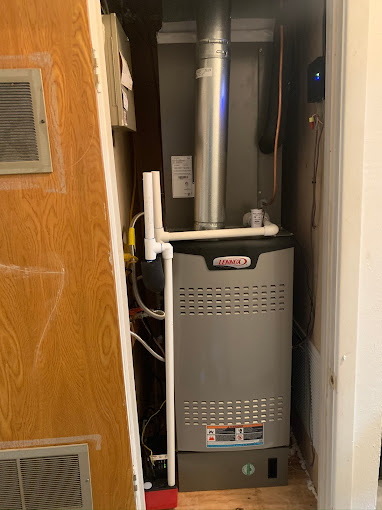
Gas handle. At the furnace, the handle should be parallel to the pipe, which means open. A handle across the pipe is closed. Do not take the valve apart. If the stove and the water heater are out too, call the gas utility.
Outdoor pipes. High-efficiency furnaces use white PVC for intake and exhaust. From the ground, clear leaves, a nest, or a cover. Do not open the flue in the attic. An 80% furnace uses a metal flue. You are not inspecting that joint from a ladder as part of this list. If you already know it is loose, leave the furnace off.
Alarms. Press test on a carbon monoxide alarm on each floor. Replace batteries that fail. This is the step people skip because the furnace "seemed fine last winter."
Storage. Move boxes off the cabinet and keep the area around the furnace clear so a smell or a water leak is visible. Do not store gasoline, paint, or solvents next to it. Those fumes are their own fire problem, and they will smell like the furnace when the blower starts.
Raise the setpoint a few degrees and wait. A normal gas furnace will start the inducer, light the burners, and then bring the blower on. Give it several minutes. The air at a nearby supply should warm. Heat pump air is milder and can feel cool on your hand while the room is still climbing. If the outdoor unit runs on a call for heat, you may have a heat pump or a dual-fuel system rather than a straight gas furnace. Heat pump vs gas furnace explains that difference. A plain air conditioner stays off while a gas furnace works.
Stay in the house for the cycle.
A light dusty smell that fades. Common on this first run. Dust on the heat exchanger cooks off. Read furnace burning smell on first startup in Arlington before you decide to ignore it. If it fades and nobody feels ill, let the cycle finish. If it builds, smells like plastic, or you see smoke, shut the furnace off.
Cold air the whole time. The blower and the burners are separate. Fan ON, a failed ignition, or a limit switch will move air that never heated. Furnace blowing cold air in Grand Prairie is the local guide for that pattern. One restart after a new filter is enough. Then stop.
Silence. No inducer, no blower. Recheck the switch, the door, and the thermostat. Then use the furnace not kicking on checklist. Do not keep flipping the breaker.
Starts, dies, starts again. Often a flame sensor or a limit switch after months off. Leave the sensor alone. If a new filter and open vents do not stop it, the furnace stays off. Furnace short cycling in Arlington covers that pattern.
Water at the furnace or a float switch in the attic pan. High-efficiency furnaces drain condensate. A clog can shut the burners down while the blower runs. Clear only a clog you can see at the outside end of the line. Water on wiring, or a pan that overflowed, means leave it off.
You will not see a cracked heat exchanger from the hallway. You will not measure gas pressure. You will not know the temperature rise unless you compare a supply and a return and read the rating plate inside the blower door, and you should not pull that door and leave it off while the furnace fires. A faded smell does not prove the vent is sound. A successful cycle means the furnace answered once. It does not replace the safety checks.
What a furnace tune-up in Arlington covers is the technician's list: ignition, flame sensor, burners, limit and rollout switches, venting, the condensate drain, and temperature rise against the plate. That visit is booked while the furnace still starts. If the first cycle already failed, you are in furnace repair, and parts are quoted after someone finds the cause. The tune-up does not include those parts unless you approve the repair.
Book the checkup before the first hard night if you can. The week of the front is when everyone who skipped the test run calls at once. Hours for a scheduled visit are Monday through Saturday, 8am to 7pm. After-hours and Sunday emergency appointments are for breakdowns, not a convenient time to discover the filter.
Leave the fan on AUTO. Check the filter monthly through the heating season, sooner if you have pets or the house was dusty. Keep returns clear. Test the carbon monoxide alarms again when you change the clocks or the batteries, not only today.
If one room stayed cold while a register near the furnace got hot, look at that room's vent and door before you assume the furnace is small. Attic ducts that leak dump heat above the ceiling. Stay on the joists if you look from the attic opening. A separated flue means the furnace goes off.
A furnace that short cycles because it is too large for the house will do that on day one and on day fifty. Sizing and airflow decide how long the equipment lasts more than the logo on the door. If this furnace is already old and the first run showed a failing igniter plus a noisy blower, get the diagnosis and the price before you approve a stack of parts. Replacement is a separate quote. You should hear it after someone has seen the system, not from the age alone.
Filter you can see light through. Fan AUTO and a setpoint you can watch. Carbon monoxide alarms tested, and you stay home for the cycle.
Then judge the smell and the air. Fading dust and warm registers means the season has started. Anything sharper, or air that stays cold, means stop and call.
Boost Air And Plumbing services gas furnaces and heat pumps in Grand Prairie, Arlington, Mansfield, Dallas, Fort Worth, and nearby North Texas communities. See our furnace tune-up, our furnace repair service, and HVAC service in Grand Prairie. Call (817) 612-9107 or book online. Hours are Monday through Saturday, 8am to 7pm, with after-hours and Sunday emergency appointments available.
When should I turn the furnace on for the first time in Grand Prairie? On a mild afternoon while you are home, before the first night you need heat. A cold front in North Texas can drop temperatures into the 30s after months of cooling. Finding a dead igniter at dinnertime is a harder call than finding it on a Saturday you chose.
What should I do before the first startup? Set the thermostat to Heat and the fan to AUTO, replace a filter you cannot see light through, open the supply vents, uncover the returns, test the carbon monoxide alarms, and look from the ground at the outdoor intake and exhaust pipes. Then run one cycle while you are home. Leave the burner compartment closed.
Is a burning smell on the first startup normal? A light dusty smell that fades during the first cycle can be dust on the heat exchanger after a long summer off. Smoke, hot plastic, rotten eggs, or a smell that gets stronger means shut the furnace off. Carbon monoxide has no smell. If an alarm sounds or anyone feels ill, get everyone outside and call 911.
What if the furnace does not start? Check the thermostat mode, the furnace switch, the breaker once, and that the blower door is latched. Do not reset a breaker that trips again. If the furnace stays silent, leave it off and call. A blower that runs with cold air is a different problem from a furnace that never starts.
Is the first startup the same as a tune-up? No. The startup you do at the thermostat confirms the furnace responds and lets you notice a smell, a noise, or no heat. A tune-up is a technician testing ignition, the flame sensor, temperature rise, venting, and the safety switches. Parts are quoted separately if something has already failed.
Should I turn the furnace on if I smell gas? No. If you smell rotten eggs, do not turn the furnace on and do not flip switches inside. Leave the home and call your gas utility or 911 from outside. Do not use the first-startup checklist until the gas smell has been checked.
Call (817) 612-9107 or book online. We serve Arlington, Grand Prairie, and the surrounding North Texas communities.
Visit our shops
Boost Air And Plumbing dispatches trucks from our Arlington main office and our Grand Prairie shop, covering Tarrant and Dallas counties with same-day HVAC and plumbing service. Call (817) 612-9107 for either location.
Arlington (Main Office)
Grand Prairie