
Arlington (Main Office)
Boost Air And PlumbingArlington, TX
- 2313 Michigan Ct
Arlington, TX 76016 - (817) 612-9107
- Monday to Saturday: 8:00 AM to 7:00 PMAfter-hours and Sunday emergency appointments available.
Boost Air Blog
Part of our Furnace Repair guide.
Plano homeowners often notice a dusty, hot smell the first time the heat comes on. The furnace sat through a long cooling season. The blower did not. It moved air for the air conditioner for months, and a film of dust landed on the heat exchanger. The first time that metal gets hot, the dust cooks off and the registers smell like burning.
That can be normal. It can also be the start of an overheating problem, an electrical smell, or something people hope is "just dust" because they do not want to turn the heat off. This page is only about the dust question: what a normal dust smell does, how long it lasts, and when the same odor means stop.
The broader first-night version is furnace burning smell on first startup in Arlington. If the odor is musty, plastic, or rotten eggs rather than dry dust, start with weird smell when the furnace turns on in Irving.
If you smell gas (a rotten egg odor), stop here. That is not dust. Do not flip switches, use a phone inside, or try to relight anything. Leave the home and call your gas utility or 911 from outside. If a carbon monoxide alarm sounds, or anyone has a headache, nausea, or dizziness that eases outdoors, get everyone out and call 911. Carbon monoxide has no odor. A dusty smell does not tell you the alarm is fine. Test the alarm before you need it.
Hot plastic, smoke, or a breaker that trips is not dust either. Turn the furnace off if you can do that safely, and leave a breaker off if it trips a second time. Do not open the burner compartment.
Normal, in this narrow case, means all of the following:
A lot of Plano houses only notice it once. The furnace runs, the dust that was on the hot surface is gone, and heat after that smells like nothing. That is the pattern people mean when they ask if a dust burning smell is normal.
It is not normal for the smell to get thicker as the cycle goes on. It is not normal for haze in the return. It is not normal for the smell to come back every time the thermostat calls for heat two weeks later. By then the loose dust has already burned off. What you are smelling is something that is still getting hot.
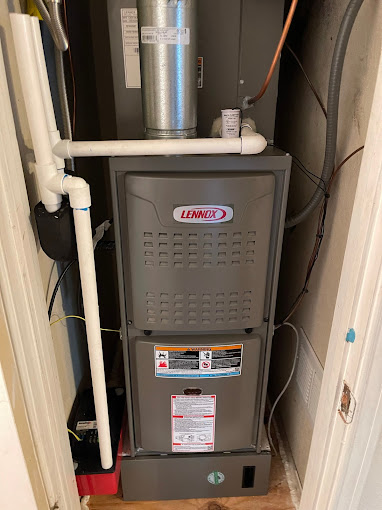
The heat exchanger is a metal chamber. Burners heat it from inside. House air moves across the outside and picks up that heat. Dust on the outside of the exchanger, and dust on the burners themselves, is what you smell. The blower wheel can hold its own layer and add a dusty odor even before the burners fully warm the air.
That dust got there because the furnace and the air conditioner share a blower. Through a North Texas cooling season the fan runs for hours. A filter that was "good enough" in May is a felt pad by October. Some of the dust gets through. In an attic install, which is common, the cabinet also lives in a dusty space. A filter door that does not close all the way lets attic air in around the filter.
Construction and remodeling add another layer. Drywall dust and sawdust are finer than household lint. If the house was worked on while the air handler was running, some of that dust is now on the heat exchanger. A new filter catches what is still in the air. It does not vacuum the heat exchanger. One heating cycle may still smell while that film cooks off. If the smell is harsh or it does not fade, shut the furnace off. Drywall dust baked on is not a reason to keep resetting the limit switch.
Give the first cycle a fair test, then stop if the smell fails the test.
Set Heat, fan AUTO, and a setpoint a few degrees above the room. Use a filter you can see light through, the size printed on the frame. Open the supplies and keep the returns clear. Then let one cycle finish while you are home.
Many gas furnaces run about 10 to 20 minutes when the house is already close to the setpoint. On a colder evening the cycle can be longer. The smell should be fading inside that run, not peaking at the end. A second, lighter smell on the next start can still be leftover dust. A third cycle that smells as strong as the first is past dust burn-off.
Do not keep the furnace running overnight to "burn it off" if you are not sure. A light smell that is clearly fading can finish its cycle. A smell you would not want to sleep with is a shut-off. Write down whether it faded, and whether the burners stayed lit. A furnace that lights, dies, and retries is a different problem from dust. See furnace short cycling in Arlington if that on-and-off pattern is what you are hearing.
Replace a gray filter before the test run. Match the size on the furnace, seat it so air cannot sneak around it, and close the door so the panel switch is pressed. A loose door keeps many furnaces from running at all.
A higher MERV number than the system was set up for can restrict air even when the filter looks clean. Restricted air overheats the heat exchanger. The limit switch shuts the burners off, the blower may keep running, and the cabinet smells hot. That hot smell is easy to call "dust" because the filter was full of dust. The fix you can try is the right filter and open vents, once. If the burners shut off again, stop. Repeated overheating is hard on the heat exchanger.
Do not run the furnace with the filter out to see if the smell goes away. The coil and the heat exchanger will collect what the filter was catching, and you have not learned anything useful.
The blower wheel, the burners, and the flame sensor are not a vacuum-cleaner job. A coated flame sensor is common after months off. The burners light, the sensor does not prove flame, and the gas shuts off. That may or may not come with a smell. Leave the sensor and the burners to a technician.
Fading dusty smell, burners stay on, no symptoms. This is the normal first-run case. Finish the cycle. If the next start is mild, you are done worrying about dust.
Hot smell plus the burners quitting. Airflow. Filter, closed vents, a weak blower, or a coil packed with dust. One restart after a new filter and open vents. Then stop.
Dusty smell with the fan set to ON and the burners off. You may be smelling a dusty blower, not the heat exchanger. Set the fan to AUTO and call for heat so you know which one it is. A hot electrical smell with the burners off is a motor or wiring. Shut it off.
Musty smell, not dry dust. Often the evaporator coil and the drain from cooling season. Unpleasant, and not this article's "normal dust" answer. If it is strong, book service. Do not spray fragrance into the return.
Rotten eggs, plastic, smoke, soot, or a carbon monoxide alarm. Not dust. Gas means leave and call from outside. An alarm or illness that eases outdoors means everyone out and 911. Plastic or smoke means furnace off, and 911 if you see fire or you cannot clear the smell safely.
When to worry about a furnace that smells like burning is the shut-off list in one place.
A homeowner can change the filter, open the vents, and watch one cycle. A tune-up is the rest: burners, flame sensor, temperature rise against the rating plate, venting, the condensate drain on a high-efficiency furnace, and a look at the heat exchanger. Dust that has baked on for several seasons is part of why that visit exists, not a reason to take the burner cover off yourself.
If the smell already faded and the furnace is heating, you can keep using it and still book the checkup before the next front. If the smell has not faded, that visit is a repair call, not a "we will get to it next month" item. See furnace repair, the furnace tune-up visit, and what a furnace tune-up covers.
How long a furnace lasts has more to do with airflow, venting, and whether it short cycles than with the badge on the door. A clean filter and an open return are the part you control. The combustion setup is the part a technician measures.
You do not need a repair for a light smell that showed up once, faded, and stayed gone. Test the carbon monoxide alarms anyway. The next cold night is a bad time to find a dead battery.
If you are about to turn the furnace on for the season and you want the order of checks before you care about the smell, the Grand Prairie first-startup checklist walks through that run.
Boost Air And Plumbing repairs gas furnaces in Plano, Arlington, Grand Prairie, Dallas, Fort Worth, and nearby North Texas communities. See our furnace repair service and HVAC service in Plano. Call (817) 612-9107 or book online. Hours are Monday through Saturday, 8am to 7pm, with after-hours and Sunday emergency appointments available.
Is a dust burning smell from the furnace normal? A light dusty smell on the first heat cycles of the season can be normal. Dust on the heat exchanger and burners cooks off when the furnace finally gets hot. It should fade during that cycle or the next, with no smoke and no one feeling ill. The same smell every startup weeks later is not leftover dust.
How long does a furnace dust smell last? Often one heating cycle, sometimes a second cycle the next time the furnace starts. Many of those cycles run about 10 to 20 minutes. The odor should weaken as the cycle goes on. If it is still strong after a few cycles, or it returns every evening, turn the furnace off and call.
Does a new filter stop the burning dust smell? A new filter removes dust from the airstream going forward. It does not wipe dust that is already on the heat exchanger. Change a filter you cannot see light through, using the size on the frame, then run one cycle and see if the smell fades. If the smell stays, or the furnace shuts the burners off, stop. Do not run the furnace with the filter removed.
Can the dust smell mean the furnace is overheating? A hot, sharp smell with the burners shutting off is different from a light smell that fades. A clogged filter, closed vents, or a weak blower can overheat the heat exchanger and trip the limit switch. That is hard on the furnace. Replace the filter, open the vents, and try once. If it trips again, leave the furnace off.
Is a dust smell the same as a gas smell? No. Burning dust smells dry and hot, like dust on a light bulb. Natural gas is odorized to smell like rotten eggs. If you smell rotten eggs, do not flip switches or use a phone inside. Leave the home and call your gas utility or 911 from outside.
Should I book a tune-up if the smell faded? If the smell was light, faded, and has not come back, the furnace can keep heating. A fall tune-up is still the visit that checks the flame sensor, burners, venting, and temperature rise before the next cold night. If the smell returns, shut the furnace off and call for repair rather than waiting on a maintenance appointment.
Call (817) 612-9107 or book online. We serve Arlington, Grand Prairie, and the surrounding North Texas communities.
Visit our shops
Boost Air And Plumbing dispatches trucks from our Arlington main office and our Grand Prairie shop, covering Tarrant and Dallas counties with same-day HVAC and plumbing service. Call (817) 612-9107 for either location.
Arlington (Main Office)
Grand Prairie