
Arlington (Main Office)
Boost Air And PlumbingArlington, TX
- 2313 Michigan Ct
Arlington, TX 76016 - (817) 612-9107
- Monday to Saturday: 8:00 AM to 7:00 PMAfter-hours and Sunday emergency appointments available.
Boost Air Blog
Part of our Furnace Repair guide.
The first cold night in Arlington is when a lot of furnaces get their first real job since spring. You set the thermostat to Heat, the blower starts, and the hallway smells like something burning. It is a common call the week a front drops temperatures into the 40s or the 30s. Some of those smells are dust on hot metal. Some of them mean the furnace should be off.
This page is about that first startup: what a dusty heat-exchanger smell is, how long it should last, and the smells that are a different problem. A smell that shows up in the middle of winter, after the furnace has already been heating the house, is not this pattern. For a wider list of odors, see weird smell when the furnace turns on in Irving. For the shut-off decision in one place, see when a burning furnace smell is worth worrying about in Garland.
If you smell gas (a rotten egg odor), stop here. Do not flip switches, use a phone inside, or try to relight anything. Leave the home and call your gas utility or 911 from outside. If a carbon monoxide alarm sounds, or anyone has a headache, nausea, or dizziness that eases outdoors, get everyone out and call 911. Carbon monoxide itself has no smell. A burning odor is not a test for it. The alarm is.
If you smell hot plastic, see smoke, or the breaker trips, turn the furnace off at its switch if you can do that without staying in the smoke. Leave a breaker off if it trips again. Do not open the burner compartment or the electrical panel.
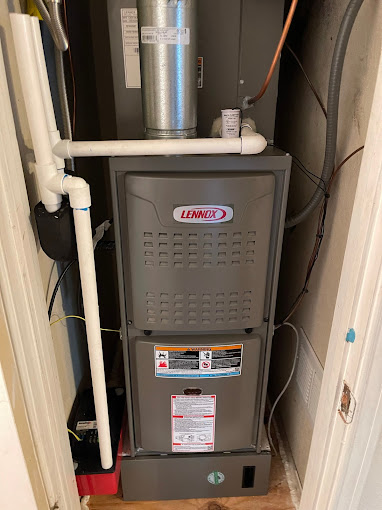
First startup here is the first call for heat after the furnace has been idle for the cooling season. It is not a repair, and it is not automatically a new furnace. The burners light, the heat exchanger warms up, and the blower pushes that air through ducts that have been moving cooled air for months.
A lot of Arlington systems live in the attic or a hall closet. The blower is the same blower the air conditioner used all summer. Dust, insulation fibers, and whatever the return pulled in settle on the heat exchanger, the burners, and the blower wheel. None of that cooks off until the metal gets hot. The first cycle is when you smell it.
A furnace that was just installed can add a second, shorter smell: light oil or paint from coatings on a new heat exchanger. That should fade over the first few cycles the same way dust does. Smoke, a harsh chemical smell that builds, or a smell that is still strong after those cycles belongs to the contractor who set the furnace, not to a cracked window.
People describe it as burning dust, hot metal, a dirty heater, or the smell of a light bulb that had dust on it. It is dry. It is usually strongest at the supply registers near the furnace, then lighter in the far rooms. It shows up a minute or two after the burners light, not before the furnace starts.
On a normal first run it fades while that cycle is still going, or by the next cycle. Many furnaces run about 10 to 20 minutes when the house is only a little below the setpoint. A longer run on a colder night can be normal. The smell should not fill the house with haze, leave soot on a register, or get worse the longer the furnace runs.
The dust is on the outside of the heat path, cooking in the airstream. It is not the same thing as a flame rolling out of the burner box, a glowing wire touching plastic, or exhaust leaking indoors. Those do not fade because you waited.
Whether a dust burning smell is normal goes further into how long that odor should last and what a filter has to do with it.
Do this on an afternoon you are home, before the night you actually need heat. A planned first start is easier to judge than a 2 a.m. surprise.
Cracking a window during that cycle is fine when the smell is light and everyone feels normal. It is not a fix. If you are unsure which smell you have, shut the furnace off and have it checked before you sleep with it running.
A fall furnace tune-up is the visit that cleans and tests the furnace before that first night. What a tune-up in Arlington covers is the checklist. The tune-up does not include parts unless you approve a repair.
Use the first minute of the smell, not a guess from the driveway.
Rotten eggs. That is the odorant in natural gas. Leave. Do not hunt for the source with the furnace door open. Call the gas utility or 911 from outside. A gas smell is not a dusty heat exchanger, even on the first night of the year.
Hot plastic, fishy, or sharp electrical. Dust does not smell like melting insulation. A blower motor, a control board, or wiring at the furnace can. Turn the furnace off. If you see smoke or the smell is thick, leave and call 911. If the breaker tripped, reset it once only. A second trip means leave it off. Do not pull the blower or bypass a switch to finish the cycle.
Oil that gets stronger. A faint oil smell on a brand-new furnace can be coatings burning off. An oil smell that builds, or a hot oily smell from an older furnace, can be a motor. Shut it off. Motors and burners are not a homeowner repair.
Musty or dirty-sock. That often shows up when heat runs across a damp evaporator coil left over from cooling season. It is unpleasant and it is not a burning-dust smell. It still should not be ignored if it is strong, but it is a different job from a gas leak. The Irving smell guide sorts that odor from the burning ones.
Exhaust or a headache. A metallic, fuel-like odor together with headache, nausea, or dizziness is a reason to get everyone outside and call 911. Soot at the draft hood, a yellow lazy flame you can see through the sight glass, or rust flakes around the burner opening mean leave the furnace off. Do not take the burner cover off to get a better look. A cracked heat exchanger is a technician's finding, and the furnace stays off until it is checked.
The same burning smell every cycle, weeks into winter. Dust that was going to cook off is gone after the first runs. A smell that returns every evening is heat on something that should not be hot: a slipping belt on an older blower, a filter pulled against the heat exchanger, wiring, or a vent problem. Shut it off.
Winters here are mostly mild, then a front arrives and every furnace in the neighborhood starts the same week. The furnace has been a blower for the air conditioner since spring. In many houses the cabinet and the ducts sit in a hot attic, which is a dusty place to store a heat exchanger for seven or eight months. The first cycle stirs that dust and heats it.
High-efficiency furnaces add a condensate drain and white PVC intake and exhaust pipes. From the ground, those pipes should be clear of leaves, a nest, or a cover before you test the heat. Do not open the flue in the attic. A separated vent pipe is a carbon monoxide risk, not a smell to air out.
An 80% furnace uses a metal flue. Corrosion or a loose joint at that flue is also a leave-it-off problem. You do not need to inspect it from a ladder to decide the smell is wrong. Soot, a strong exhaust odor, or an alarm is enough.
The name on the cabinet matters less than whether the furnace can move air and vent. A correctly sized furnace with a clean filter and an open return will cook off a season of dust and settle down. A furnace that is starved of air runs the heat exchanger hotter than it should, and a "first startup smell" becomes an overheating smell. Repeated limit trips are hard on that heat exchanger. Replace the filter, open the vents, and try once. If it trips again, stop.
Shut the furnace off and call if:
A light smell that fades on the first cycle, with no smoke and no symptoms, can be dust. Write down how long it lasted and whether the next cycle was quieter. If you want that first run done before a cold night, book a furnace tune-up rather than waiting to see what the hallway smells like at midnight.
Repair cost depends on the cause. You should hear what failed, and the price, after diagnosis and before any work starts. If the furnace is older and a repair is hard to justify, that conversation happens after someone has seen the heat exchanger, the venting, and the airflow, not from the smell alone.
Boost Air And Plumbing repairs gas furnaces in Arlington, Grand Prairie, Mansfield, Dallas, Fort Worth, and nearby North Texas communities. See our furnace repair service and HVAC service in Arlington. Call (817) 612-9107 or book online. Hours are Monday through Saturday, 8am to 7pm, with after-hours and Sunday emergency appointments available.
Is a burning smell normal the first time the furnace starts? A light dusty or hot-metal smell on the first heat call of the season can be dust that settled on the heat exchanger and burners while the furnace sat idle. It should fade during that first cycle or the next one, without smoke, soot, or a headache. A smell that gets stronger, smells like plastic or rotten eggs, or is still there after a couple of cycles is not dust burn-off.
How long should a first-startup furnace smell last in Arlington? Many houses only notice it for the first heating cycle, often 10 to 20 minutes, and maybe once more the next time the furnace starts. It should get weaker, not stronger. If the same burning smell is still obvious after a few cycles, or it returns every time you use heat weeks later, shut the furnace off and call.
Why does the furnace smell only on the first cold night? Arlington furnaces often sit from spring through a long cooling season. Dust from the attic and from the air the blower moved all summer lands on the heat exchanger. The first time the burners heat that metal, the dust cooks off and you smell it at the registers. A furnace that ran last week should not suddenly smell like that unless something else is on the hot metal.
Should I open the windows for the first startup? A cracked window is reasonable during a short test run if the smell is light and dusty and nobody feels ill. It does not fix a gas leak, an electrical smell, or a venting problem. If the smell is sharp, you see smoke, or anyone feels worse, leave the house. Do not try to air out a rotten egg smell.
Can a dirty filter cause a burning smell on startup? A clogged filter can make the furnace overheat. The heat exchanger gets hotter than it should, and the limit switch may shut the burners off. That can smell hot, and it is hard on the heat exchanger. Replace the filter with the size on the frame, open the vents, and try one more cycle. If the smell or the shutdown returns, stop.
What should I do if I smell gas or the carbon monoxide alarm goes off? If you smell gas, do not flip switches or use a phone inside. Leave the home and call your gas utility or 911 from outside. If a carbon monoxide alarm sounds, or anyone has a headache, nausea, or dizziness that eases outdoors, get everyone outside and call 911. Do not run the furnace again until it has been checked.
Call (817) 612-9107 or book online. We serve Arlington, Grand Prairie, and the surrounding North Texas communities.
Visit our shops
Boost Air And Plumbing dispatches trucks from our Arlington main office and our Grand Prairie shop, covering Tarrant and Dallas counties with same-day HVAC and plumbing service. Call (817) 612-9107 for either location.
Arlington (Main Office)
Grand Prairie