
Arlington (Main Office)
Boost Air And PlumbingArlington, TX
- 2313 Michigan Ct
Arlington, TX 76016 - (817) 612-9107
- Monday to Saturday: 8:00 AM to 7:00 PM
Boost Air Blog
Furnace Ignitor Replacement in Arlington? Call (817) 612-9107 or Book Online
Part of our Furnace Repair guide.
Quick answer
A furnace ignitor replacement in Arlington is the repair for a hot surface igniter that no longer glows, so the gas valve never opens and the house stays cold. Angi's 2026 national figures put a straightforward replacement around $150 to $250, with a wider table band and a higher after-hours band. Those are not an Arlington quote. Leave the part in the furnace, and if you smell gas, leave the house.
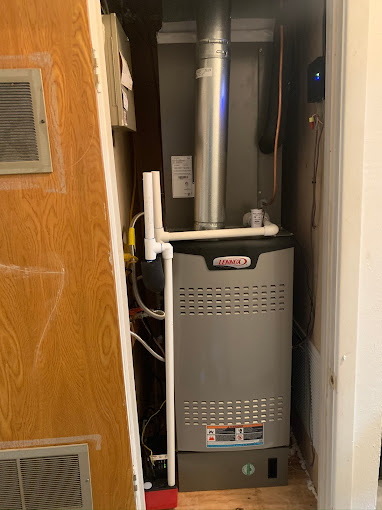
A furnace that will not light in Arlington often stops at the hot surface ignitor. The inducer runs. You may hear a click. The burners never settle into a blue flame, because the ignitor never glows, or it glows too weakly for the control board to open the gas valve. The blower can come on later and push room-temperature air. Arlington furnaces are often in a hall closet or an attic. You should not take the burner cover off to watch for that glow.
People spell the part ignitor and igniter. It is the same component. This page is that part: how it fails, what national cost guides publish, and why replacing it is not a hardware-store job. The wider list of reasons a furnace will not light is furnace not igniting. The full no-heat visit in a neighboring city is furnace repair in Grand Prairie and furnace repair in Fort Worth.
If you smell gas (a rotten egg odor), stop. Do not flip switches, use a phone inside, or keep cycling the thermostat. Leave the home and call your gas utility or 911 from outside. If a carbon monoxide alarm sounds, get everyone out and call 911. A dark ignitor is usually the safety controls keeping the gas valve shut. A gas smell is a different event. Leave.
Do not work on the ignitor. It is fragile, it is powered, and it sits in the burner box of a gas furnace. Do not remove the cover, do not touch the element, and do not buy a "universal" and install it yourself.
On a modern hot-surface furnace the order is fixed. The thermostat calls. The inducer clears the burners and the vent. The pressure switch proves that draft. The ignitor heats. The gas valve opens. The flame sensor proves flame. The blower starts after the heat exchanger is warm.
The board often waits until the ignitor draws the current it expects. A cracked element can look faintly warm and still never release the gas. You cannot judge that from the hallway. Silicon carbide ignitors are brittle and usually glow bright orange. Silicon nitride ignitors are tougher and can glow less. Both have to match the furnace. The wrong resistance can glow and still fail to open the valve.
A spark ignitor or an intermittent pilot is a different system. A standing-pilot furnace uses a thermocouple or a thermopile, not a glowing hot surface ignitor. Buying the glowing part for a furnace that sparks, or that has a pilot you can see, does not fix it. If yours has a pilot, follow only the relighting steps printed on the furnace, and stop if you smell gas or the pilot will not stay lit.
Hot surface ignitors live in extreme heat, then sit through a long North Texas cooling season. Heat cycles crack the element. A small crack can stay hidden until the next call for heat. The first night in the 30s or 40s is when you find out.
A failed ignitor is not the only reason the burners stay dark. A pressure switch that will not close, because of a blocked PVC vent, a cracked hose, or water in the hose, keeps the ignitor dark on purpose. A closed gas shutoff keeps the valve from opening even when the ignitor is good. A control board can fail to send power. That is why a technician meters the ignitor and the steps around it before the part goes in. Replacing the ignitor when the pressure switch is the fault leaves you with a new part and the same cold house.
Burners that light and then die are usually a flame sensor or a limit, not a dark ignitor. The sensor cannot prove flame, so the board closes the gas valve within seconds. If you get a real flame, even a short one, you are probably past the ignitor. What that rod does, and how cleaning differs from replacing it, is furnace flame sensor in Mansfield.
Angi's 2026 furnace repair guide lists an ignitor in its parts table at about $150 to $500. The same guide's write-up puts a straightforward replacement at about $150 to $250, and says an after-hours call can land around $350 to $500. The table and the paragraph are both on that page. They are not the same band, because one of them mixes a wider set of jobs and the other separates a daytime replacement from after-hours work.
These are national industry ranges, not an Arlington price, and not a Boost Air quote. Your price depends on the furnace, whether the matching ignitor is a common part or a model-specific one, whether the furnace is in a closet or an attic, and whether the ignitor is actually the failed step. A diagnosis that finds a pressure switch, a board, or a heat exchanger is a different number. You should hear the failed step and the price before the part is replaced.
There is no honest single Arlington price to print ahead of that visit. Use the national bands only to recognize a quote that has no diagnosis attached to it.
From the ground, you can still do the safe checks. Set Heat, fan AUTO, and a setpoint above the room. Replace a filter you cannot see light through, and latch the blower door. Confirm the gas handle is parallel to the pipe without taking anything apart. Reset a tripped breaker once. If it trips again, or you smell electrical burning, leave it off. Clear debris from PVC vent pipes you can see without a ladder. Then stop.
The visit confirms where the sequence stops. Inducer and the pressure switch, whether the ignitor receives power and reaches the current the board wants, whether the valve would open, and whether a flame signal comes back. A blink code narrows it. The ignitor is replaced when that step is the fault, with the part that matches the model.
A matching ignitor on a younger furnace with a sound heat exchanger is often a repair. A cracked heat exchanger, soot, or a rollout that tripped because flame left the burner box is a different conversation. The U.S. Department of Energy's Energy Saver material lists a furnace more than 15 years old as one reason to consider replacement. That is a prompt, not an expiration date. Ask for a free replacement estimate if the repair and a new furnace are close. The ignitor quote stands on its own when the heat exchanger is sound.
Furnace repair is the service. HVAC service in Arlington is the local page.
Boost Air HVAC & Plumbing repairs gas furnaces in Arlington, Grand Prairie, Mansfield, Fort Worth, and nearby communities. We do not service boilers. See our furnace repair service and HVAC service in Arlington. Call (817) 612-9107 or book online. Hours are Monday through Saturday, 8am to 7pm.
Call (817) 612-9107 or book online. We serve Arlington, Grand Prairie, and the surrounding North Texas communities.
Visit our shops
Boost Air And Plumbing dispatches trucks from our Arlington main office and our Grand Prairie shop, covering Tarrant and Dallas counties with same-day HVAC and plumbing service. Call (817) 612-9107 for either location.
Arlington (Main Office)
Grand Prairie