
Arlington (Main Office)
Boost Air And PlumbingArlington, TX
- 2313 Michigan Ct
Arlington, TX 76016 - (817) 612-9107
- Monday to Saturday: 8:00 AM to 7:00 PM
Boost Air Blog
Repair, a Tune-Up, or a Replacement in Carrollton, TX? Call (817) 612-9107 or Book Online
Part of our Furnace Repair guide.
Quick answer
Heating and cooling service in Carrollton is usually one shared system in an attic or a closet, and the right job is a repair, a tune-up, or a replacement depending on what failed and how old the equipment is. A tune-up checks a system that still runs. A failed igniter, capacitor, drain, or blower is a repair. A cracked heat exchanger or a coil that will not hold refrigerant is a replacement conversation. If you smell gas, leave and call from outside.
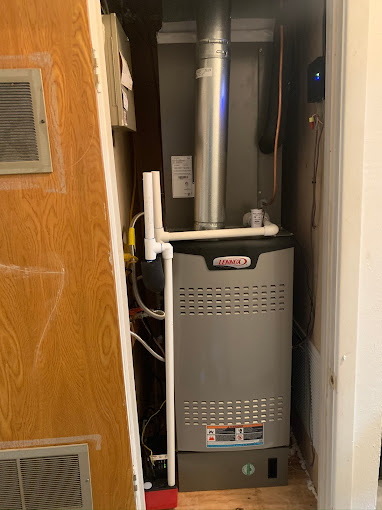
Heating and cooling in Carrollton is one system doing two seasons. The air conditioner runs for months. The furnace sits, then a cold front asks it to light on the first night that actually feels cold. Many Carrollton houses are slab-on-grade, so the furnace, the evaporator coil, and the blower are in the attic or a hall closet, and the outdoor unit is on a pad beside the house. From the hallway, a failed capacitor, a clogged drain, and a furnace that never lights can all feel like "the heat and air quit."
This page is how to sort the call before you book it: repair, tune-up, or replacement, and the checks that are safe to do first. The parts on a no-heat visit are in furnace repair in Arlington. A no-heat night in a neighboring city, including what the technician measures, is furnace repair in Grand Prairie. If the furnace itself is being replaced, the install steps for an attic or closet in this city are furnace installation in Carrollton.
If you smell gas (a rotten egg odor), stop. Do not flip switches, use a phone inside, or try to relight anything. Leave the home and call your gas utility or 911 from outside. If a carbon monoxide alarm sounds, or anyone has a headache, nausea, or dizziness that eases outdoors, get everyone out and call 911. Do not air the house out and keep the furnace running.
An electrical burning smell is a stop. Reset a tripped breaker once. If it trips again, the disconnect smells hot, or you see scorched wire, leave it off. Do not open the blower compartment or the outdoor electrical panel. Capacitors store a charge after the power is off.
The blower, the filter, the ducts, and the thermostat serve both heat and cool. The burners and the outdoor compressor do not. A filter packed with a summer of dust can trip the furnace limit in November and freeze the evaporator coil in July. A condensate drain full of algae can shut the air conditioner off in August and, on a high-efficiency furnace, shut the burners off in January because that furnace also makes water.
North Texas weather is why the same house needs both conversations in one year. Long afternoons in the 90s run the outdoor unit, then a front drops into the 30s and asks the furnace to light. Attic heat and a cold attic in winter both land on equipment that sat in between. A quote that ignores the attic, the drain, and the ducts is not a finished look at the house.
Furnace repair is the heating service. AC repair is the cooling service. HVAC service in Carrollton is the local page.
Repair. The system will not start, the outdoor fan hums and does not spin, the air stays warm, or water shows up under the attic unit. Common repairs are a capacitor, a contactor, a fan motor, a float on a clogged drain, and a refrigerant leak that is found rather than topped off. A can from a store is not a measured charge.
Tune-up. The system still cools, but the outdoor coil is matted with cottonwood and dust, the filter is overdue, and the drain is starting to grow slime. A maintenance visit cleans what is accessible, confirms the thermostat and the blower door, and checks the drain before a float switch becomes a ceiling stain. It does not replace a failed compressor, and it does not "add a little refrigerant" as a routine step. If cooling is already gone, you are past a tune-up.
Replacement. A failed compressor, a coil that will not hold refrigerant, or a major failure on equipment around 15 years old is a time to hear a replacement price beside the repair. Industry guidance, including Department of Energy Energy Saver material, puts a typical central air conditioner life around 15 to 20 years. That is a prompt, not a date the system expires, and it is not a Carrollton price. The badge on the condenser is a weak predictor. Sizing, airflow, the charge, and the ducts decide how long the next system lasts.
A supply duct that has come apart in the attic can leave one room hot while the rest of the house is fine. That is airflow, not proof the outdoor unit is finished.
Repair. No heat, a click with no flame, burners that light and die, or a blower that runs while the vents stay cold. On most furnaces built in the last few decades the sequence is fixed: thermostat, inducer, pressure switch, igniter, gas valve, flame sensor, blower. The failed step is the repair. An igniter, a flame sensor, a capacitor, or a pressure switch on a younger furnace with a sound heat exchanger is often that repair. Do not take the burner cover off to watch for the glow.
Tune-up. The furnace still heats, and you want it checked before the first hard front: filter, blower door, the outdoor PVC intake and exhaust if the furnace is high-efficiency, and the condensate trap so a float does not open on the coldest night. A tune-up will not fix a furnace that already will not light. Book the repair.
Replacement. A cracked heat exchanger, soot, a yellow lazy flame, a rusted cabinet, or a major failure on a furnace around 15 years old is a replacement conversation. The U.S. Department of Energy's Energy Saver material lists a furnace more than 15 years old as one reason to consider replacement. That is a prompt, not an expiration date. The install, not the brochure, decides the next lifespan: airflow, the flue, burner setup, and a size that does not short cycle. Those steps for a Carrollton attic or closet are in furnace installation in Carrollton.
Do not bypass a rollout switch, tape a door switch closed, or jumper a pressure switch to force heat. Those switches are the reason a failed furnace is often just cold.
None of these open a burner box or an electrical compartment.
Write down what you hear. Inducer and then silence is a different fault from burners that light and die, and both are different from an outdoor unit that hums while the fan sits still.
Call when the checks are done and the house still will not heat or cool, the burners light and die, the coil ices over, water is at a ceiling, or the breaker trips again. The technician confirms the thermostat call, airflow, and any safety holding the system off, then tests the failed step. You hear what failed, and the price, before parts go in. There is no single Carrollton price. It depends on the system and the diagnosis.
A tune-up is the visit you book while the system still works. If the repair and a replacement are close, ask for a free replacement estimate. The repair quote stands on its own when the equipment is still a reasonable candidate. We do not service boilers.
Boost Air HVAC & Plumbing repairs furnaces and central air in Carrollton, Arlington, Grand Prairie, Fort Worth, and nearby communities. See our furnace repair service, our AC repair service, and HVAC service in Carrollton. Call (817) 612-9107 or book online. $0 service fee with approved repair. Same-day service Mon-Fri. Hours are Monday through Saturday, 8am to 7pm.
What heating and cooling problems in Carrollton are a repair? A failed part on a system that is otherwise sound is usually a repair. That includes an igniter or flame sensor that stops the burners, a capacitor or fan motor on the air conditioner, a clogged condensate drain, and a blower that will not move air. You should hear what failed, and the price, before parts go in.
What is a tune-up, and what is it not? A tune-up is a check of a system that still runs. It covers the filter, the blower door, airflow, the outdoor coil, the condensate drain, and the safety steps that keep a furnace from starting dirty after a long summer. It is not a repair of a part that has already failed, and it is not a replacement.
When is replacement the clearer conversation? A cracked heat exchanger, a compressor that has failed, a coil that will not hold refrigerant, or a major failure on equipment around 15 years old is a time to hear a replacement price next to the repair. The U.S. Department of Energy's Energy Saver material treats that age as a prompt, not an expiration date. Install quality matters more than the brand on the cabinet.
What can I check before I call? Set the thermostat to the mode you want, fan on AUTO, and a setpoint the system can reach. Replace a filter you cannot see light through and latch the blower door. Reset a tripped breaker once. If it trips again, leave it off. Do not open an electrical compartment, and do not add refrigerant from a can.
What if I smell gas or the carbon monoxide alarm sounds? If you smell gas, do not flip switches or use a phone inside. Leave the home and call your gas utility or 911 from outside. If a carbon monoxide alarm sounds, or anyone has a headache, nausea, or dizziness that eases outdoors, get everyone out and call 911. Do not keep the furnace running.
Call (817) 612-9107 or book online. We serve Arlington, Grand Prairie, and the surrounding North Texas communities.
Visit our shops
Boost Air And Plumbing dispatches trucks from our Arlington main office and our Grand Prairie shop, covering Tarrant and Dallas counties with same-day HVAC and plumbing service. Call (817) 612-9107 for either location.
Arlington (Main Office)
Grand Prairie