
Arlington (Main Office)
Boost Air And PlumbingArlington, TX
- 2313 Michigan Ct
Arlington, TX 76016 - (817) 612-9107
- Monday to Saturday: 8:00 AM to 7:00 PM
Boost Air Blog
How often should the furnace be checked? Call (817) 612-9107 or Book Online
Part of our Furnace Tune-Up guide.
Quick answer
Once a year, in the fall, is the baseline for a Grand Prairie furnace. Check it sooner when the unit is older, pets load the filter, the heat runs hard all winter, or last season already failed. A skipped year usually becomes a repair on the first cold night, not a scheduled disaster.
Grand Prairie furnaces do a short job in a long year. Cooling runs from late spring well into fall. The burners may sit from March until a cold front in November or December drops the house into the 40s, sometimes the 30s. That first call for heat is often the first time anyone finds a coated flame sensor, a filter you cannot see through, or an igniter that cracked while it sat.
How often should you get a furnace tune-up comes down to the calendar and the house. Once a year, in the fall, is the baseline. Sooner makes sense when the furnace is older, pets load the filter, the heat runs hard all winter, or last season already failed. A skipped year usually becomes a repair on the first cold night.
A gas furnace that heats for one season gets looked at once a year. In Grand Prairie the season is short, which is why the visit gets skipped, and why it belongs on the calendar. Parts that work only when the burners are lit sit idle for months. The flame sensor films over. A hot surface igniter that was marginal in March opens in November. A high-efficiency furnace still makes water when it runs, and a trap that sat dry can clog on the first real cycle.
The blower did not sit. It moved cooling air all summer, and that dust lands on the wheel. A lot of Grand Prairie equipment is in the attic or a hall closet, and a filter that seemed fine in August can be packed by the time you want heat. Restricted air makes the furnace overheat and shut off even when the burners light.
Opening the cabinet covers the vent, the limit switch, and the heat exchanger. A crack there is uncommon, and it means the furnace is shut off.
Book the visit before the first night you need heat. Furnace tune-up is that service. Turning the system on yourself is a separate check, covered in first time turning on the furnace this season in Grand Prairie. That cycle tells you whether the furnace answers. It does not measure temperature rise, clean a sensor, or inspect the heat exchanger.
The visit is a test and a cleaning while the furnace still runs. A failed part found during it is a separate repair, quoted before it is installed.
The technician confirms the thermostat is calling for heat, watches the inducer and the ignition, and looks at the flame. The flame sensor gets cleaned when it is coated, because a coated sensor is the usual reason the burners light and then shut off. Temperature rise is compared with the rating plate. Rise that is too high means too little air is moving. Rise that is too low can mean too much air, or a firing rate that does not match the furnace.
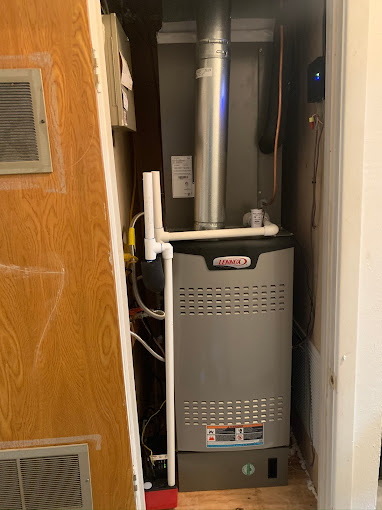
An 80 percent furnace uses a metal flue. A condensing furnace, around 90 percent AFUE and above, uses plastic intake and exhaust pipe and a condensate drain. Leaves, a nest, or a sagging drain will shut that furnace down or leave water in the wrong place. The limit and rollout switches get checked. The blower and the filter get looked at, because airflow keeps the heat exchanger inside its temperature range.
A cracked igniter, a dead inducer, or a sensor that will not hold a flame is outside the cleaning. The service fee is $0 when you approve that repair. A cracked heat exchanger or a rusted-through cabinet is a replacement conversation, not another year of waiting.
Most Grand Prairie houses are fine on the fall visit. These are the ones that should not wait a full year.
An older furnace. A furnace around 15 years old that still heats evenly can stay on a yearly visit. One that needed an igniter last winter, that short-cycles, or that has a rusted cabinet should be seen before the next season. A borderline part on that visit is a reason for a second look during the winter.
Pets. Hair loads the filter and the blower. A one-inch filter with two shedding dogs can clog in a month, so keep changing it. If the last visit found a matted blower wheel, have that wheel seen more than once a year. Less air means the furnace runs hotter.
Heavy winter use. Many furnaces here barely run. Someone home all day, a higher setpoint, a cold room over the garage, or a winter that stays cold puts more hours on the sensor and the filter. If the furnace ran for days at a time last January, book the fall visit early. A second visit in February is for a problem the first visit already named.
A problem you already had. Short cycling, a burning smell that did not fade, a tripped limit, water under a high-efficiency furnace, or a no-heat call last season are reasons to get ahead of the next cold front. A carbon monoxide alarm that sounded with the heat on means the furnace stays off until the heat exchanger and the venting have been checked.
Skip one fall and the furnace may heat the house anyway. It may also light and shut off on a dirty flame sensor, stop because a packed filter tripped the limit, or refuse to run because a condensate trap clogged while it sat. An igniter that was already cracked may open on the first cycle. Those are repair calls.
Less common, and the reason the cabinet gets opened: a loose flue joint, a condensate line dumping water near the heat exchanger, or a visible crack in the heat exchanger. A crack means the furnace is shut down. Finding that on a mild afternoon leaves you a choice. Finding it when the house is at 58 degrees does not.
Carbon monoxide has no smell. Test the alarms on each floor. If one sounds, or anyone has a headache, nausea, or dizziness that eases outdoors, get everyone out and call 911. If you smell rotten eggs, leave the furnace off, leave the house, and call the gas utility or 911 from outside.
The ordinary loss is the day you get to choose. The first cold front fills the schedule, and a mild-Thursday finding becomes a no-heat call alongside everyone else. Same-day service runs Monday through Friday, and that visit is a repair.
The furnace tune-up is $29 through December 31, 2026. That price is ignition, airflow, and the safety controls. Parts are priced before they go in. A new filter and a working carbon monoxide alarm still matter if you skip the visit. They do not replace opening the cabinet.
Between visits, replace a filter you cannot see light through, in the size printed on the rack. A much higher MERV rating than the furnace was set up for can choke air the same way dirt does. Keep supplies open in the rooms you use, and keep furniture off the returns. From the ground, clear leaves off the plastic pipes on a high-efficiency furnace. Leave the burner box closed.
If the furnace will not start, set the thermostat to heat, check the switch on the cabinet, and reset a tripped breaker once. If it trips again, leave it off and call. HVAC service in Grand Prairie is the local page for the fall tune-up and for heating repair.
Call (817) 612-9107 or book online. Hours are Monday through Saturday, 8am to 7pm. Book the $29 visit before the first hard cold night, while the appointment is still a tune-up.
Call (817) 612-9107 or book online. We serve Arlington, Grand Prairie, and the surrounding North Texas communities.
Visit our shops
Boost Air And Plumbing dispatches trucks from our Arlington main office and our Grand Prairie shop, covering Tarrant and Dallas counties with same-day HVAC and plumbing service. Call (817) 612-9107 for either location.
Arlington (Main Office)
Grand Prairie