
Arlington (Main Office)
Boost Air And PlumbingArlington, TX
- 2313 Michigan Ct
Arlington, TX 76016 - (817) 612-9107
- Monday to Saturday: 8:00 AM to 7:00 PM
Boost Air Blog
Is Your Furnace Causing a High Gas Bill? Call (817) 612-9107 or Book Online
Part of our Furnace Repair guide.
Quick answer
A furnace causing a high gas bill in Grand Prairie usually means the burners are running more hours than the weather explains, or firing harder than the rating plate allows. Compare CCF or therms with a similar cold month before you blame the furnace. A higher setpoint, a packed filter, closed vents, and leaky attic ducts add runtime. Gas pressure, burner condition, and the heat exchanger are a technician's checks. If you smell gas, leave and call the gas utility or 911 from outside.
If you smell gas, a rotten egg odor, leave and call the gas utility or 911 from outside. Do not flip switches or use a phone inside. If a carbon monoxide alarm sounds, or anyone has a headache, nausea, or dizziness that eases outdoors, get everyone out and call 911. Carbon monoxide has no smell. A high bill is not a reason to open the burner cover, turn a screw on the gas valve, or test a fitting with a flame.
Furnace causing high gas bill is the Grand Prairie question after a cold week, when the bill is higher and the furnace has been running. The meter records every gas appliance on that service. The furnace, the water heater, a fireplace, the range, and a dryer all share it. A colder month raises usage on a furnace that is working. A furnace problem shows up as more gas than the weather explains, or as burners that run and the rooms still will not hold the setpoint.
Furnace repair is the visit that measures temperature rise and gas input instead of guessing from the dollar total. HVAC service in Grand Prairie is the local page. The Grand Prairie shop is at 2100 TX-360 Ste 907. A lot of these furnaces sit in a hall closet or the attic, with the ducts in that attic.
The bill has a dollar total and a usage number, usually CCF or therms. A higher dollar amount with almost the same usage is the rate or a fee. A higher usage number is more gas through the meter. Write down the usage and the dates on the bill. Compare them with the same stretch last winter, and with how cold those days were. A week in the 20s will use more gas than a week in the 50s on a healthy furnace.
Other appliances move that number with the furnace off. A fireplace that ran through the month, longer showers, or a gas dryer will show up on the same meter. If what changed is the furnace (longer cycles, a new setpoint, rooms that will not catch up), start there.
A high bill with no gas smell is rarely a hole in a pipe. If you do smell gas, leave. Do not hunt for a leak, and do not take fittings apart. Call the gas utility to check the meter.
If the outdoor unit is what starts on a call for heat, the house is on a heat pump. That outdoor unit does not burn gas. A high gas bill then has to come from a gas furnace used as backup, a water heater, or another gas appliance.
The main burners use gas during a call for heat. A setpoint a few degrees higher, or a schedule that holds the daytime temperature while the house is empty, adds hours on the meter. The U.S. Department of Energy's Energy Saver material says turning a thermostat back 7 to 10 degrees for 8 hours a day can save as much as 10 percent a year on heating and cooling. That figure is national. It is not a prediction for one Grand Prairie bill. The useful local check is the setpoint you actually held during the dates on the bill.
Fan ON does not open the gas valve. The blower runs, and the burners stay off until the house drops below the setpoint. On an attic system that constant fan pulls air through cold ducts, the rooms feel cooler, and the usual next step is a higher heat setting. Set the fan to AUTO. The blower should stop about a minute or two after the burners shut off. A fan that is still running long after that, with AUTO selected, is a furnace fan that will not turn off.
A thermostat in a cold hallway, or on a drafty wall, keeps calling after the rest of the house is warm. A thermostat in the sun, or directly over a supply vent, satisfies early and the far rooms stay cold, so someone raises the number. For one cycle, set the fan to AUTO and the setpoint a couple of degrees above the room temperature shown on the screen. Wait long enough to see whether the furnace can catch up. Do not jumper the thermostat wires. The wrong pair can blow the fuse on the control board.
A filter you cannot see light through restricts air across the heat exchanger. Two things follow, and both can raise gas use. The furnace stays lit and simply runs longer because less heat is reaching the rooms. Or the high-limit switch opens, the burners shut off, and the furnace tries again every few minutes. The house never reaches the setpoint, so the burners keep restarting. Replace the filter with the size printed on the cabinet, with the furnace switch off. Open the supply vents. Pull furniture off the return grilles. Do not run the furnace with the filter slot empty. If it still shuts off every few minutes after one new filter, stop. That pattern is furnace short cycling in Arlington.
Closing several supply vents, so the blower has nowhere to put the air, can overheat the heat exchanger the same way a packed filter does. The rooms you left open can still lag, and the thermostat keeps calling.
Many Grand Prairie ducts run through the attic. A supply joint that has come apart dumps heated air above the ceiling. The thermostat never sees that heat, so the burners keep firing at their normal rate for extra hours. You might notice one room that will not warm, or usage that jumped without a colder month. Do not crawl a hot attic to tape a joint. That look is part of the repair visit, with the furnace off.
Air at the vents that never warms, while the blower runs, is furnace blowing cold air in Grand Prairie. The thermostat stays unsatisfied, which is how a no-heat problem becomes a usage problem.
Use the sight glass if the furnace has one. A steady blue flame is what you want. A yellow, lazy, or lifting flame, or soot around the burner opening, means leave the furnace off. Do not adjust the air shutters. Do not turn the screw on the gas valve. Those settings change how much gas the burners use. The wrong direction over-fires the heat exchanger or sends a poor flame into the flue. A yellow flame is also a reason to take a carbon monoxide alarm seriously. If the alarm sounds, get everyone out and call 911.
An older furnace may have a standing pilot that burns a small amount of gas all the time. A hot-surface ignitor does not. A pilot, by itself, is not a bill that doubled. Do not try to relight it if you smell gas. Leave the knobs on the gas valve body alone. On the pipe at the furnace, the handle in line with the pipe is open. The handle across the pipe is closed. Turn that handle only if you know someone closed it and you do not smell gas.
Write down whether the burners run for many minutes or only a few, and which rooms lag. That note is more useful than the dollar total.
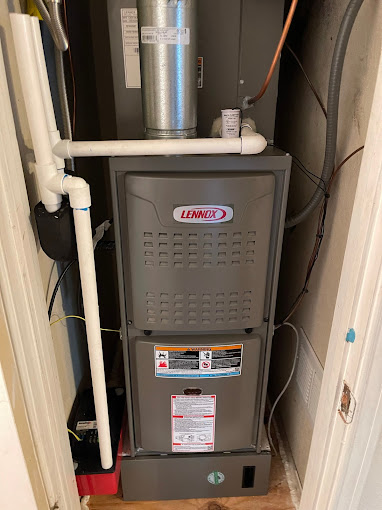
The rating plate lists the input, in BTU per hour, and a temperature-rise range. The visit checks both against that plate. Temperature rise is the supply-air temperature minus the return-air temperature, taken after the burners have been lit long enough to settle. Above the range on the plate, the furnace is not moving enough air. Filter, indoor coil, blower wheel, and ducts are the usual reasons. That low airflow makes the furnace run long, or it trips the limit and short cycles. Below the range, the burners may be under-fired, or more air is crossing the exchanger than the furnace was set up for. Under-firing can leave the furnace running longer and still heating poorly. It does not, by itself, mean the meter recorded more gas. The measurement decides it.
Input is checked at the furnace, not from the bill. A manometer reads gas pressure at the valve. The technician also times the gas meter with the other gas appliances off, and compares that rate with the input printed on the cabinet. Pressure above the plate uses more gas per hour than the furnace was built for, and it can overheat the heat exchanger. Do not turn that adjustment to "save gas" or to get more heat. The plate is the limit.
A two-stage or modulating furnace that stays on high fire burns the high rate on mild days, when the lower rate would have held the house. Grand Prairie has a lot of those mild days between cold fronts. The thermostat, the board, and the staging wires decide it. Replacing the furnace because the bill was high, without this test, skips the repair.
The burners and the heat exchanger get checked for rust, scale, and soot. Scale on the exchanger moves less heat into the airstream, so the furnace can run longer to satisfy the thermostat. A cracked heat exchanger is a reason to leave the furnace off. A high bill does not prove a crack. Soot, a yellow flame, or a carbon monoxide alarm does mean stop using it until someone inspects it. A cracked heat exchanger, and whether the furnace is replaced, is that decision after the inspection. A loose duct joint or a wrong gas pressure, with a sound exchanger, is a repair.
Call when the usage, in CCF or therms, is up and the weather does not explain it, the furnace runs most of the hour and the rooms still lag, it shuts off every few minutes, the flame is yellow or you see soot, or a new filter and open vents do not change the next bill's pattern. A gas smell or a carbon monoxide alarm is a leave-the-house call.
You should hear what failed, and the price, before parts go in. The price depends on the furnace and the cause. A duct joint, a gas-pressure correction, or a staging repair, with a sound heat exchanger, is a repair. A cracked heat exchanger, or a major failure on a furnace more than 15 years old, is a time to hear a replacement price beside the repair. The U.S. Department of Energy's Energy Saver material lists that age as one reason to consider replacement, not as an expiration date.
Boost Air And Plumbing repairs gas furnaces in Grand Prairie, Arlington, Mansfield, Fort Worth, and nearby communities. We do not service boilers. The service fee is $0 when you approve the repair. Same-day service is available Monday through Friday. Hours are Monday through Saturday, 8am to 7pm. Call (817) 612-9107 or book online. Have the usage from the bill, the setpoint you held, and whether the furnace runs long or in short bursts.
Call (817) 612-9107 or book online. We serve Arlington, Grand Prairie, and the surrounding North Texas communities.
Visit our shops
Boost Air And Plumbing dispatches trucks from our Arlington main office and our Grand Prairie shop, covering Tarrant and Dallas counties with same-day HVAC and plumbing service. Call (817) 612-9107 for either location.
Arlington (Main Office)
Grand Prairie